
Dear Friend of the House,
Every April, we recognize Volunteer Month to celebrate the people who help move our community forward. Our volunteers are neighbours who show up with generosity and energy. They help make the House a place of belonging.
In this issue, we show what belonging looks like in action with Hilary, a long‑time volunteer with our English Learning Groups. Through sharing their time, care, and expertise, volunteers like Hilary create everyday acts of welcoming that shape lasting neighbourliness.
We’re also sharing highlights from this spring’s March Break Camp, held at a new location in Parkdale. It was a fun-filled week that brought youth and families in the community together – a glimpse into a future worth celebrating.
Read more about what has been happening at the House.
Volunteers, like Hilary, helps newcomers build English language skills and new connections.

Hilary is a long-time volunteer teacher with the English Learning Groups in West Neighbourhood House, supporting newcomers as they work to improve their English language skills, build new connections, and integrate.
She began as a teacher in London, Ontario, before moving to Toronto. After a short break from teaching, she realized how much she missed it. “I really enjoyed the experience and got to meet so many great people and build friendships,” Hilary says.
After learning about the English Learning Groups in the House, Hilary joined as a volunteer—and eight years later, she’s still teaching every Tuesday night.
“I think the students enjoy coming to my class, because they might only speak their own language at home, with their partner or with their family. So, they would really need a space that’s all about speaking English,” she says.
English Learning Groups help newcomers to develop language skills and participate in civic engagement opportunities. The groups are supported by staff in the Immigrant and Refugee Services Program at West Neighbourhood House.
Hilary initially taught in person, but during the pandemic the classes moved online. Despite the unexpected change, it led Hilary to realize the value of accessibility by holding virtual classes instead.
The students also have opportunities to go on daytrips that help them learn about different aspects of Canadian culture. These adventures in person together often end up being a wonderful way to build friendships with one another.
“We get together in person about three to four times a year in Toronto. We’ve done picnics in High Park, visited the cinema, Bata Shoe Museum, board game cafes, and more,” she says.
“I’m very appreciative of West NH for giving me this opportunity to be a volunteer. I have established a lot of strong connections with the students. It brings me joy.”
Beyond language learning, the classes focus on practical skills that support newcomers to navigate employment opportunities, such as interview preparation and applying.
One of Hilary’s favourite aspects of her volunteer role is its flexibility. Each month, she asks students what they want to learn about and builds her lessons around their interests. Their topics range from culture, travel, sports, to the arts. The group also runs a monthly movie club when students watch a film and discuss it together.
“Every couple months, I have the students give presentations to each other. We’ve had students talk about the country that they grew up in. They give us a brief overview of the food and the holidays, the languages and everything to do with their country.”
Hilary has also enjoyed seeing her students’ progress, not only in developing their English language skills, but also in other aspects of their lives.
“It’s been nice being an English teacher for eight years because some of my students have gotten their citizenship and I think that’s so special. They send me pictures of them with their little Canada flags after the citizenship test.”
Thank you to our over 500 wonderful volunteers!
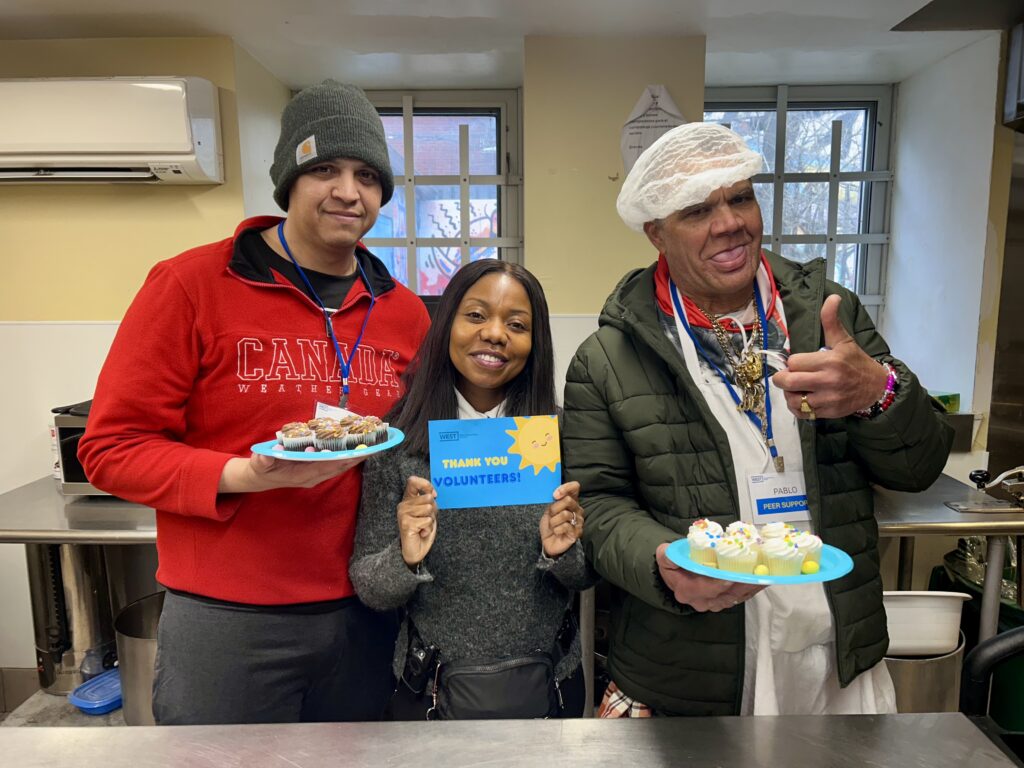
We celebrate and recognize the contributions volunteers make to our community all year long. Volunteers are part of everything we do at West Neighbourhood House.
March Break Camp takes place in Parkdale for the first time

This year, the House hosted our March Break program at Dr. Rita Cox–Kina Minagok Public School in Parkdale. Some of the participants were familiar, coming from our After-school Program. We were thrilled to welcome several new faces as well.
The children taking part in the camp were aged 6 to 12. They enjoyed a full week of activities that encouraged creativity, exploration and adventure.
During the week, the children dove into hands‑on themed activities—from Northern Lights chalk art during Arctic Adventures Day to exploring salt‑water coral reefs for Under the Sea Day. Jungle Jam Day was full of energy with games like Snake‑in‑the‑Grass tag, while Rainforest Day brought everyone together for our teamwork-focused River Challenge.
The week was filled with smiles, excitement, and a strong sense of belonging. The children arrived each day eager to participate, support one another, and make new friends. To help ensure the program is accessible to all families, we offer subsidized spaces.
The registration for the Summer Day Camp is now open. Open to children aged 6 to 12. This year’s camp will take place from June 29th to August 21st at Holy Family Catholic school in Parkdale. To register, please contact Mallory Cochrane at mallory@westnh.org or call 416-532-7586 extension. 126.
For more information, please visit our website page at westnh.org/summercamp
COMMUNITY ADVOCACY ALERT:
Federal government cuts risk deepening Toronto’s housing and healthcare crisis
The very deep cuts to the numbers of immigrants and refugees allowed in Canada will hurt our country in the long run, especially for our future workforce. The new immigration rules are causing confusion and injustice with people who came here in good faith and paying significant fees but are now caught in limbo.
In addition, budget cuts to our funding from Immigration, Refugees, and Citizenship Canada (IRCC) hurts how newcomers successfully start new lives in Canada. Even more concerning is loss of support for preventative healthcare for refugees which increases future emergency room costs in our strained hospitals. As well, a further reduction from planned cuts to current housing assistance is a crushing blow to the shelter partners we work with. More permanent, stable housing is the first step to finding jobs, community, and ways to integrate.
For more information, read an article from the Canadian Centre for Policy Alternatives, which outlines how the cuts could exacerbate key issues facing our community, including housing and healthcare. Read the full article online here.
Stay in Touch!
There’s one more great — and totally free! — way you can help strengthen our community: Forward this email to someone you know who might be interested in the work of the House. Anyone can sign up to receive our emails by visiting westnh.org/newsletter!
And, don’t forget to follow us on Facebook, Instagram, LinkedIn and Twitter.