
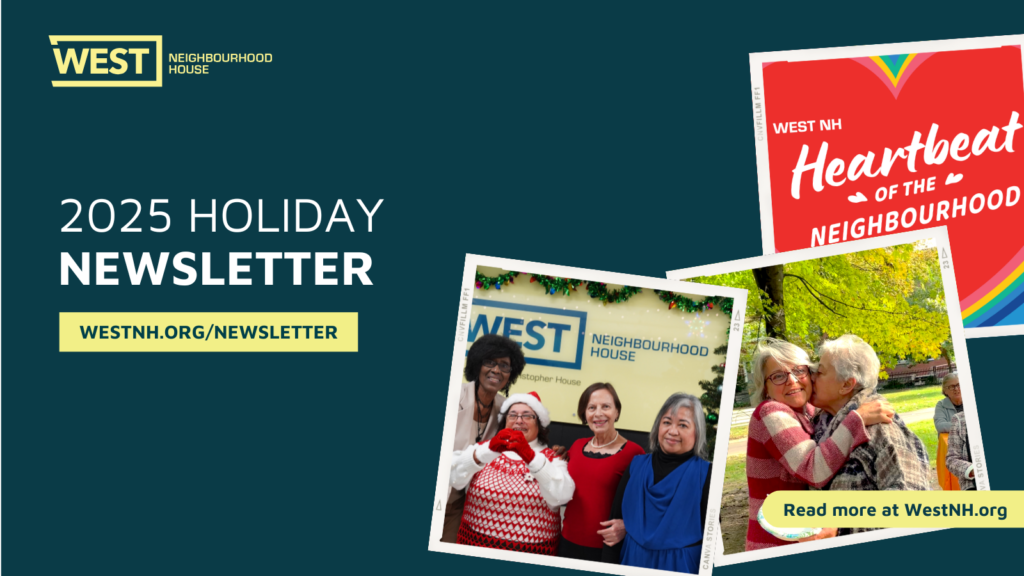
Dear Friends of the House,
In this special holiday newsletter, we wanted to tell you about a mother and her adult daughter who have both enjoyed a strong connection with the House. We have a profile of one our extraordinary volunteers from our tax clinic which supports low-income people to get the maximum benefit from filing their income taxes. Finally, we offer some advice on how you could navigate potentially tense conversations during the holiday season (or any other time!).
Read more about what has been happening at the House.
Mother and daughter form a special bond with the House
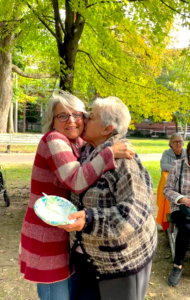
As a multi-service neighbourhood centre, West Neighbourhood House often provides supports across different stages in the life cycle. Mary-Lou and Luisa, her mother, formed a long-term relationship with the House over the past 18 years.
Mary-Lou became involved with the House in 2007 when she was looking for a place for her mother to go in order to remain active following her father’s passing.
“It was about empowering my mother to become more independent on her own. She was very reliant on my father to drive her places, and they spent a lot of time together. She became a widow and was somewhat lonely and looking for places to socialize and get involved,” Mary-Lou remembers.
“I learned through just talking to people that West Neighbourhood House was a place that had events and programs for people my mother’s age.”
Luisa started coming to the House to attend many of the activities and events including with West Active Living and Learning Centre (WALLC) which offers many opportunities for social interaction and community events for adults 55 years and older. “My mother would go to the House gatherings in Trinity-Bellwoods Park. She would enjoy dancing and listening to music and the birthday celebrations. She is a very social person, and she really enjoyed all that,” Mary-Lou says.
During the pandemic, many programs at the House continued to operate remotely and volunteers connected with Luisa by telephone in her first language.
“Covid happened and then things stopped, and mom was really missing the interaction. The isolation actually accelerated some of her health issues.”
Her mother needed the kind of support that could allow her to continue to live in the community, and once again Mary-Lou looked to the House. “We were interacting with doctors and it became evident that mom’s needs were going to be increasing in the next few years,” she shares.
Luisa began receiving regular visits by West NH Personal Support Workers (PSWs) who supported Mary-Lou’s mother with daily tasks as well as housekeeping services. Our team of PSWs provided the care that allowed Luisa to continue to live in her own home despite her increasing challenges. She was also connected with the Visiting and Social Safety (VSS) Program where staff and volunteers connect with participants over the phone to help reduce isolation and also provide security checks in case the participant experiences a sudden change in mood or other concerns in which case the House could quickly be alerted and intervene.
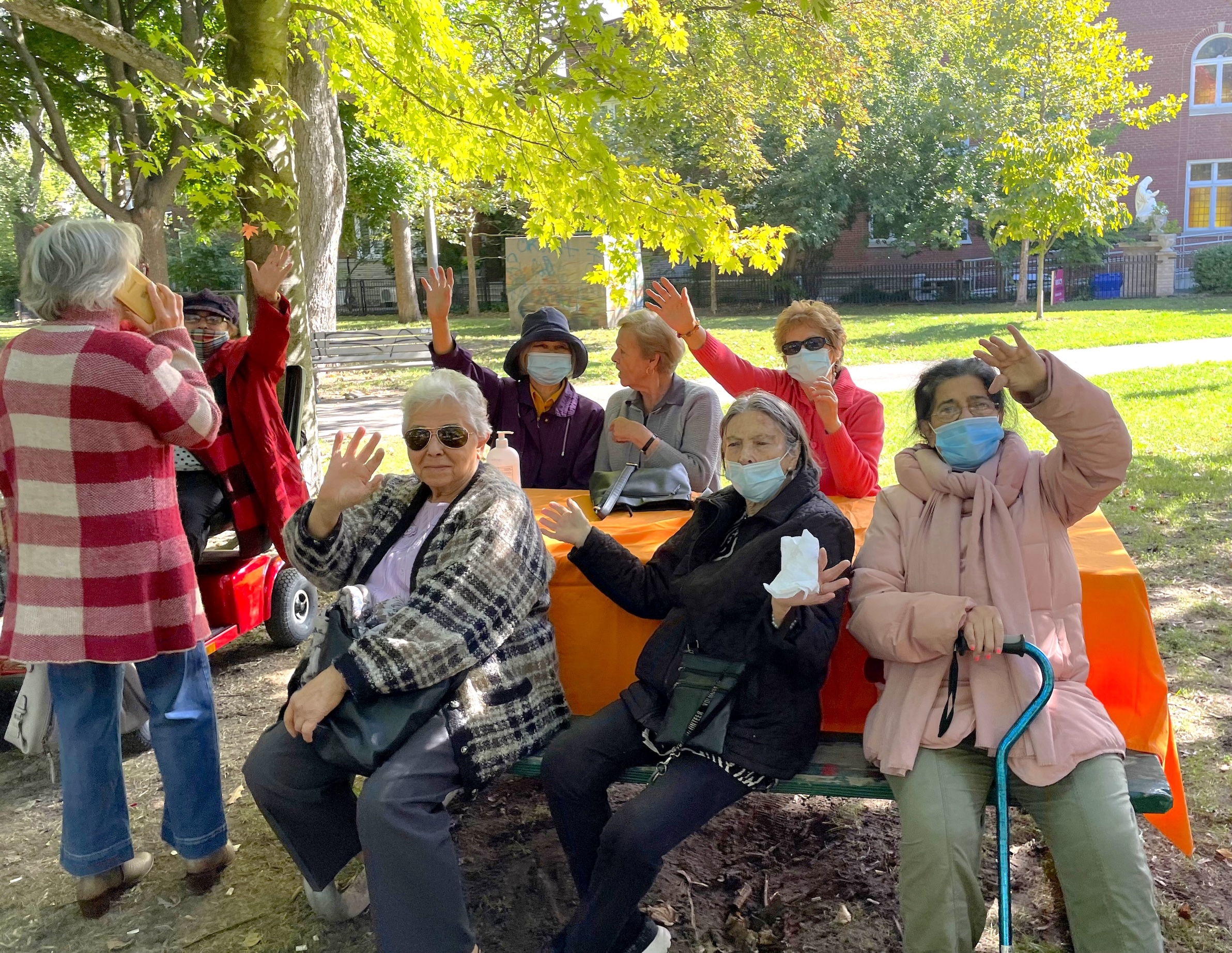
Luisa also began attending the Adult Day Program which provides social and recreational activities for older adults experiencing physical and cognitive difficulties. The program helps prevent or delays admission to long-term care facilities (nursing homes) and aims to reduce hospital stays and emergency room visits. The Adult Day program also helps provide relief and support for caregivers like Mary-Lou, providing respite care to allow caregivers some personal time to rest and recalibrate. Mary-Lou is Luisa’s advocate and primary caregiver. The overwhelming load of balancing caregiving and career responsibilities made it impossible for Mary-Lou to continue working and so she left the paid labour force years before her retirement to care for her mother. It is a challenge that many people face as their parents age.
Finding Support with the Caregivers Group
Like many caregivers, Mary-Lou sometimes found it difficult to balance the needs of her aging mother with her own. Mary-Lou needed to think about her own well-being so that she could continue to care for her mother.
“The staff [at West Neighbourhood House] helped me organize the day so that I was getting the benefit of going home and having dinner with my husband and kids. It helped free up my time with my mom, in order to be able to dedicate what little time I had to myself or to my own family,” Mary-Lou says.
“I developed familiar relationships with the people [at West Neighbourhood House] and everybody became part of the family. It also really helped me as the caregiver. It was and has continued to be a shoulder to lean on.”
As her ability to live independently in the community and in her own home declined, it was time to find alternative living arrangements for Luisa. Luisa and Mary-Lou had discussed what to do in the event that Luisa could no longer live independently and safely in her own home. Together, they toured long-term care residences and Luisa chose the ones she would consider as her next place to live. In January 2024, Luisa could no longer manage personal and daily activities without round the clock care and moved to a nursing home.
Mary-Lou began attending the Caregiver Training and Education Respite Series at the House. The group provides valuable knowledge, support and training for informal and family caregivers.
“It’s a safe place to talk about things that other people who are going through the same experience can share.”
“We are able to speak a language that we all understand, and sometimes we don’t even have to speak, we all just understand the emotions we’re going through, and we can relate,” she says of her experiences with the caregivers’ support group.
“We can speak openly about some of the things that we’re feeling. We’re putting out our humanity, everything that’s human about us is out there because we’re in a weakened position sometimes and feeling very vulnerable.”
Advocating for Better Solutions
Mary-Lou’s experience with her mother, navigating the often-complex structure of the healthcare system and opening up difficult discussions about wishes and intentions for end-of-life care, has led her to become a Family Advocate.
“We sometimes feel that the healthcare system doesn’t listen to us, that we have to be advocates, and that we have to ask for things. We have to assert that because it can be an overwhelming health system at times,” she says.
“I am helping those who want assistance, including families, to facilitate these difficult discussions about what to do if they have a loved one who is experiencing physical and cognitive decline.”
“This means getting to understand that person and what their wants would be before that person loses the capacity to speak for themselves and having difficult conversations on how to plan for what’s to come. Also, how are we going to prepare ourselves and our loved ones.”
Mary-Lou believes the solution still rests with government-funded public healthcare and more adequately funded not-for-profit nursing homes that provide an excellent level of care. Considering her mother’s health needs, Mary-Lou has come to accept that a nursing home is better equipped with the resources to address the level of attention and care her mother requires that Mary-Lou cannot provide.
What she continues to do is advocate for her mother, interacting on a team approach basis with the nursing home to ensure her mother and all of the residents receive the level of care they deserve and which is expected of a nursing home.
“We should have better and more access to nursing homes. We need more not-for-profit government homes run by the government. There’s just not enough of those. We need to rally our politicians and do what we can to get more funding.”
Finding new purpose through tax help at West Neighbourhood House

After entering retirement, Graeme found a new way to give back – by helping members of the community complete their taxes. “The biggest priority for myself was how can I help people who are less fortunate and take advantage of skills that I have that may be helpful to them,” he shares.
Graeme has volunteered as a tax preparer at the income tax clinic at the House for the last two years. The income tax clinic takes place in March and April every year when staff and volunteers work alongside to assist low-income individuals and families complete their income taxes.
Although Graeme’s professional background as a corporate executive wasn’t in accounting, he did possess previous experience from preparing taxes for his family members, including using tax software.
He says that the impact of the work done in the clinic is deeply felt. Graeme spoke about one case where a refugee who was on government assistance and living in a shelter. This person was a nurse in their home country.
“They started working as a Personal Support Worker. And then they started going to nursing school to transfer their qualifications. That was all enabled by the tax benefits they received. They also got some scholarships, tuition and support and so forth.”
“At least once a day you hear someone’s story. It was sort of a transformational event, so it made me even more committed. That’s the reason that I keep coming back is because when you hear stories like that, whether it’s her case, a newcomer to Canada, or someone who has severe mental health issues and they’re trying their best to turn their life around”.
“If you can help them to access certain benefits, give them a leg up, they can try and make the transition from homelessness to shelter, to some kind of assisted housing.”
Some cases are emotionally challenging, but the support from staff and fellow volunteers makes all the difference.
“I would hear stories like that and end up in tears. It’s not challenging because you’re helping people, but hearing about their situations is tough. The volunteers and staff are fantastic. They check up on you, and if you need help, someone always has the answer. I look forward to coming every time.”
Thanks to Graeme and the tax volunteers for helping our community utilize the income tax system as intended: getting the benefits and tax credits that help low-income Canadians.
How to get through difficult social issue topics at holiday gatherings
The holidays is a good time to connect with your family and friends. However, everyone has been in a situation where someone has chimed in about a contentious issue, and you don’t know how to best respond.
These days, information is more readily available than ever before, but so is misinformation, which often leads to misconceptions, half-truths, misleading and just inaccurate statements.
We decided to put together a list of some key resources on hot button issues that will help you respond in a polite and constructive way:
- John Stapleton, a long-term friend of the House, wrote an interesting piece in response to a Washington Post article about welfare fraud. Read the full article on Open Policy Ontario.
- Greg Dewling, who has worked both in non-profit and for-profit housing, published a post on LinkedIn to explain why non-profit housing usually costs more to build than private-sector housing, while arguing that combining the best elements of both is the best way to build the affordable housing we need. Read the full post on LinkedIn.
- The UNHCR, the United Nations refugee agency, highlighted a program by the Government of Canada which is helping skilled refugees and other displaced individuals integrate into Canada’s labour market and easing critical labour shortages. Read the full article here.
Meals on Wheels is looking for volunteer runners and drivers

Are you looking for a new volunteer position? West Neighbourhood House is in need of volunteers for our Meals on Wheels program.
We are looking for runners and drivers to help deliver meals to community members. Meals on Wheels delivers healthy meals six days a week, including to seniors and those living with disabilities, to help them live independently in their own homes.
All shifts are from 10am to 1pm. For more information and to apply, email volunteers@westnh.org or call 416-532-4828 EXT. 171, or visit our website at westnh.org/volunteer.

Every year, more than 15,000 neighbours walk through our doors, seeking connection, stability, learning, care, and hope.
A long-time volunteer recently told us, “West Neighbourhood House is the heartbeat of the neighbourhood.” That simple phrase captures exactly who we are and why your generosity matters so much.
Every year, more than 15,000 neighbours walk through our doors, seeking connection, stability, learning, care, and hope. Parents striving to create bright futures for their children. Seniors looking for companionship and safety. Youth discovering their strengths and potential. Newcomers finding a sense of belonging.
In a time when loneliness, polarization, housing challenges, and financial stresses are growing, West Neighbourhood House remains a place where people come together, support one another, and feel seen. It is a place where community lives.
And right now, that community needs you.
Your donation keeps essential programs open and accessible: preschool drop-ins that give children the best possible start; financial empowerment programs that help people stabilize their lives; housing support for people searching for safe, affordable homes; settlement services that welcome newcomers; after-school programs and youth mentorship; seniors’ wellness, home care, Meals on Wheels, and so much more.

Your gift today ensures that no neighbour is left without support, connection, or a sense of belonging.
Please consider making a donation to West Neighbourhood House. Together, we can keep the Heartbeat of the neighbourhood strong.
You can give online by using the link below:
With gratitude,
Adrienne Lipsey, Volunteer Board President and
Maureen Fair, Executive Director.
P.S. Becoming a monthly donor is one of the most powerful ways to strengthen our community. Monthly gifts are easy, reliable, and provide crucial ongoing support that helps us plan for the future. Join us at westnh.org/donate
Stay in Touch!
There’s one more great — and totally free! — way you can help strengthen our community: Forward this email to someone you know who might be interested in the work of the House. Anyone can sign up to receive our emails by visiting westnh.org/newsletter!
And, don’t forget to follow us on Facebook, Instagram, LinkedIn and Twitter.
